Product Description
Nerve Regeneration & Tissue-Protection Research Peptide
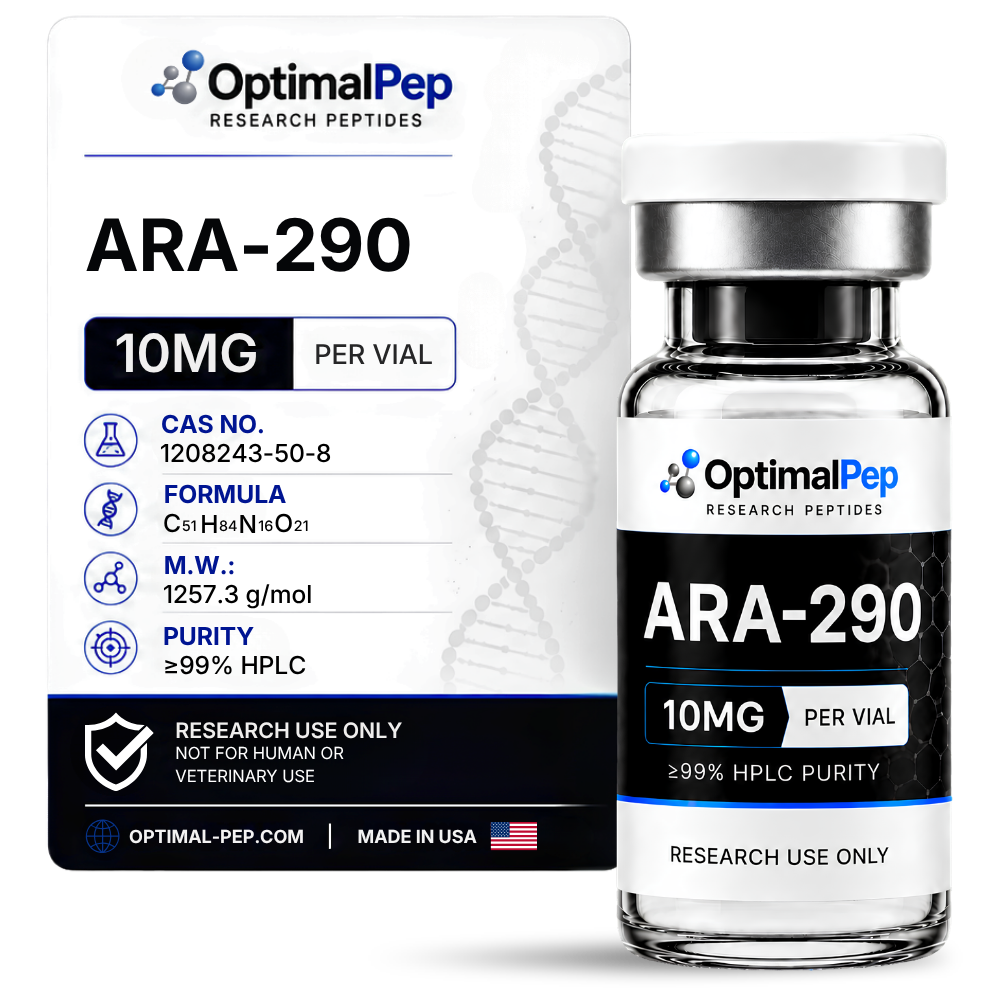
ARA-290, also known as cibinetide, is an 11-amino-acid peptide derived from erythropoietin (EPO). Unlike full-length EPO, which stimulates red blood cell production, ARA-290 was developed to investigate tissue-protective and anti-inflammatory signaling without the same erythropoietic activity. Its primary research mechanism involves activation of the innate repair receptor (IRR), a receptor complex associated with cellular responses to injury and inflammation.
ARA-290 has been investigated in small fiber neuropathy research, including clinical studies involving sarcoidosis-associated and type 2 diabetes–associated neuropathic symptoms. These studies have examined changes in neuropathic pain, burning sensations, sensory symptoms, and nerve fiber measurements. Findings vary by study and endpoint, and ARA-290 remains an investigational compound rather than an established treatment for neuropathy.
Nerve regeneration research examines whether ARA-290–associated signaling influences intraepidermal nerve fiber density and corneal nerve fiber measurements. These endpoints are used to study small nerve fiber structure and potential recovery in models of peripheral nerve injury and metabolic dysfunction.
Additional laboratory research explores anti-inflammatory and tissue-protective pathways associated with innate repair receptor activation. Investigations include inflammatory mediator signaling, immune-cell responses, and cellular injury mechanisms in peripheral and central nervous system models.
ARA-290 is also studied in experimental models of metabolic and ischemic tissue stress, including investigations involving cardiac and renal tissue. These models examine whether tissue-protective signaling can influence cellular injury and inflammatory responses. Such findings do not establish clinical protection of the heart, kidneys, or other organs.
ARA-290 is designed to separate EPO-associated tissue-protective signaling from red blood cell stimulation. This does not establish that it has no effects on blood pressure, hematocrit, or other clinical safety endpoints under all research conditions.
Key Research Areas
🔗
Innate repair receptor (IRR) signaling in research examining EPO-derived tissue-protective pathways and cellular responses to injury
⚡
Small fiber neuropathy research involving sarcoidosis-associated and type 2 diabetes–associated neuropathic symptoms
🧠
Neuropathic pain signaling in studies examining burning sensations, sensory discomfort, and nerve injury–associated pain endpoints
🧬
Small nerve fiber regeneration through investigation of intraepidermal nerve fiber density and peripheral nerve recovery markers
👁️
Corneal nerve fiber research involving corneal nerve structure, fiber density, and regeneration-associated measurements
🛡️
Anti-inflammatory signaling in models examining immune-response modulation and pro-inflammatory mediator activity
🔬
Neuroprotective pathway investigation involving cellular stress and injury responses in peripheral and central nervous system research models
❤️
Cardiac tissue-protection research in experimental models examining cellular responses to ischemic injury and inflammatory stress
🧫
Renal tissue-protection research in laboratory models examining kidney-cell injury, metabolic stress, and inflammatory signaling
🩸
Non-erythropoietic EPO-derived signaling in studies distinguishing tissue-repair receptor activity from conventional EPO-associated red blood cell production
This 10 mg presentation supports controlled nerve-repair and tissue-protection research designs, including investigations of innate repair receptor activity, small fiber neuropathy, neuropathic pain signaling, intraepidermal and corneal nerve fiber measurements, inflammatory pathways, cellular injury responses, and non-erythropoietic EPO-derived signaling.
Intended Use
📦 Format: Lyophilized powder (10mg)
🧬 Compound: ARA-290 / cibinetide
⚠️ Use: For laboratory research use only. Not for human or veterinary use.
Why Researchers Choose This Compound
🔗
Defined innate repair receptor research provides a framework for examining EPO-derived tissue-protective signaling separately from conventional erythropoietic pathways.
⚡
Small fiber neuropathy research relevance supports investigations involving neuropathic pain endpoints, sensory symptoms, and nerve fiber measurements in sarcoidosis- and diabetes-associated study populations.
🧬
Nerve regeneration research utility offers a focused framework for examining intraepidermal and corneal nerve fiber structure and recovery-associated endpoints.
🛡️
Inflammatory and tissue-protection pathway relevance supports laboratory investigations of immune signaling and cellular responses to neurological, metabolic, and ischemic stress.
Product Notes
✅ Research category: Nerve regeneration, neuropathic pain signaling, inflammation, and tissue protection
✅ Study context: Laboratory and preclinical research models, with investigational clinical studies involving small fiber neuropathy
✅ Alternate name: Cibinetide
✅ Peptide structure: 11-amino-acid peptide derived from erythropoietin (EPO)
✅ Receptor focus: Innate repair receptor (IRR)–associated tissue-protective signaling
✅ Neurological focus: Small fiber neuropathy, neuropathic pain endpoints, and peripheral nerve injury responses
✅ Nerve fiber focus: Intraepidermal and corneal nerve fiber density and regeneration-associated measurements
✅ Inflammatory focus: Immune-response modulation and pro-inflammatory signaling in cellular and tissue-injury models
✅ Tissue-protection focus: Experimental cardiac, renal, metabolic, and ischemic stress pathways
✅ Erythropoietic focus: Investigation of tissue-protective activity without the red blood cell stimulation associated with full-length EPO
✅ Evidence status: Investigational; research findings do not establish approved clinical uses or guaranteed safety outcomes