





Advanced Research Peptide
IGF-1 Receptor Signaling Research System
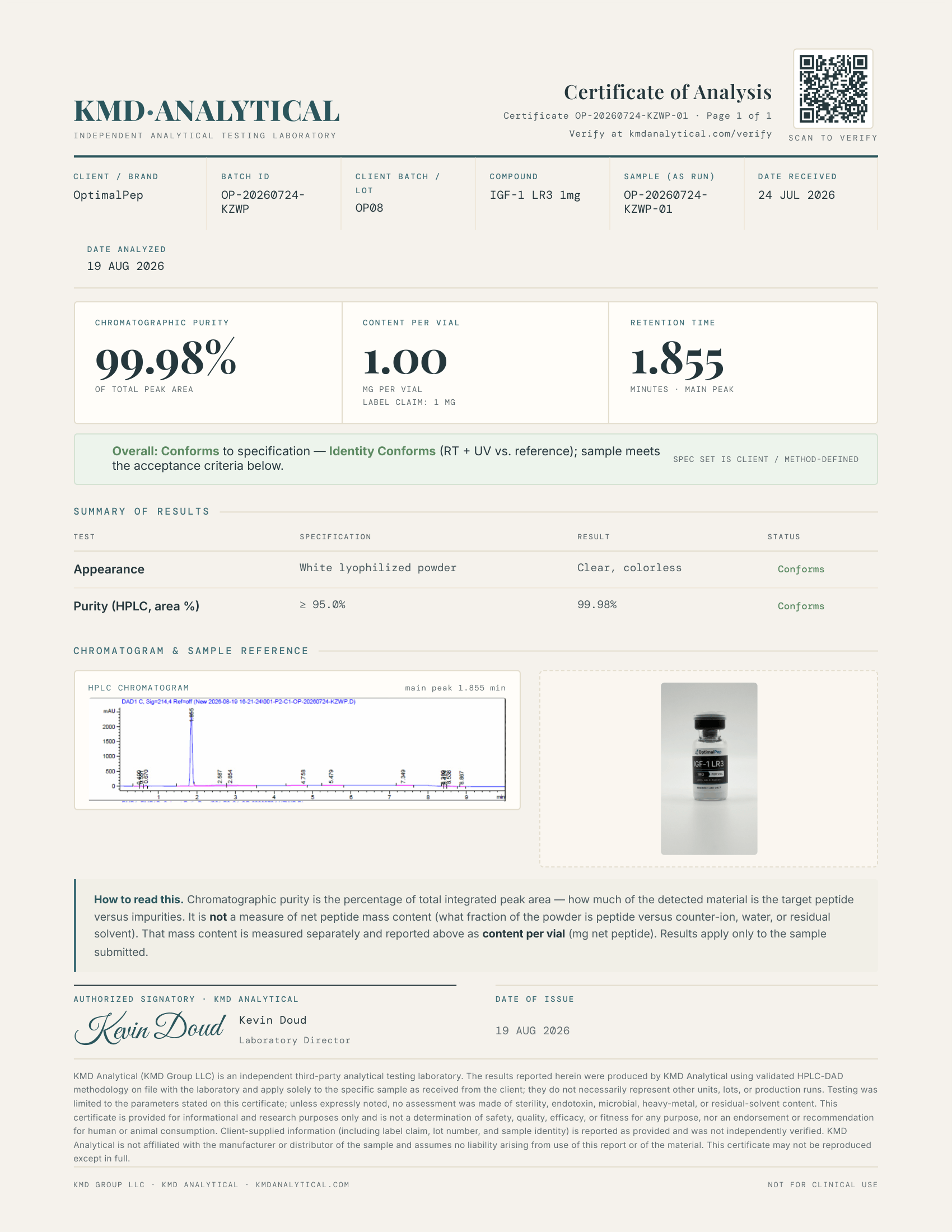
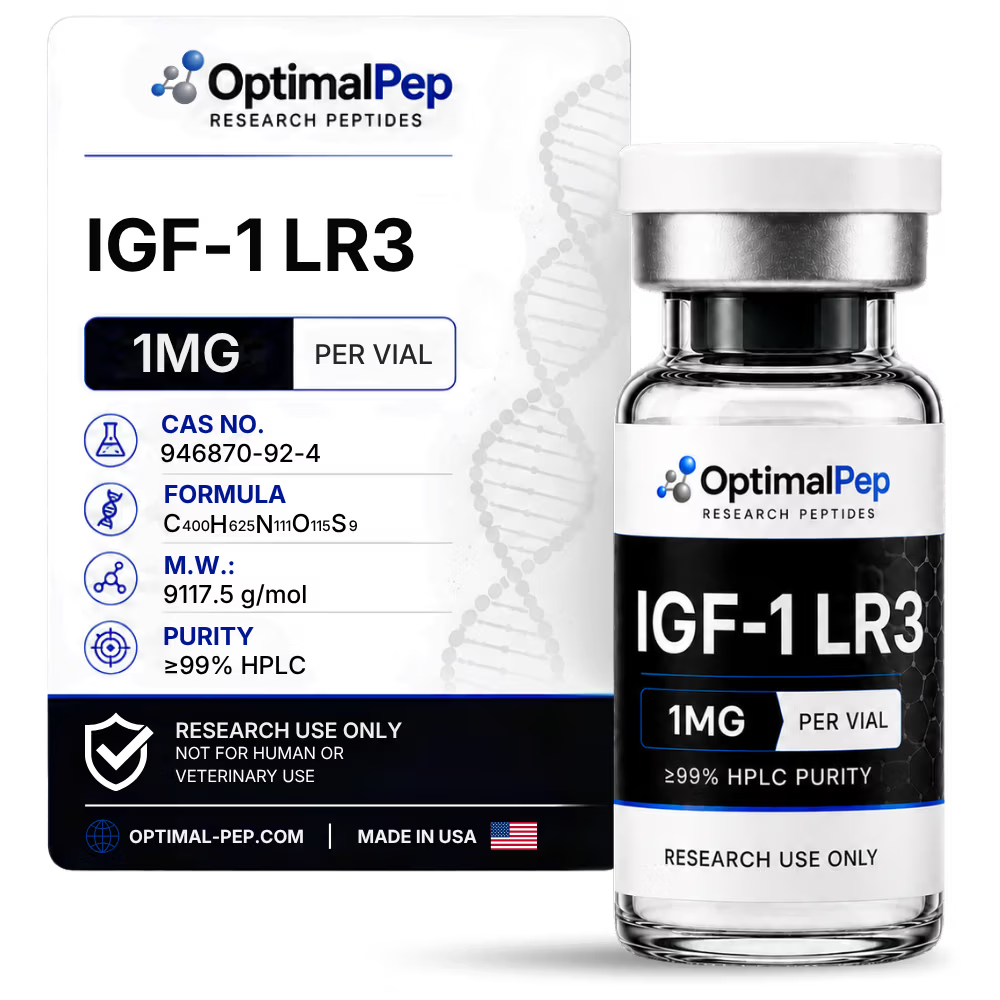
IGF-1 LR3 1mg, also known as Insulin-like Growth Factor-1 Long R3, is a modified IGF-1 analog studied for
extended cellular signaling, IGF-1 receptor activity, protein synthesis, tissue repair, and nutrient-partitioning pathways across
muscle-growth, recovery, body-composition, anabolic, and regenerative research models.
🧬 IGF-1 Pathway
IGF-1 receptor signaling research
⚡ Protein Synthesis
Muscle regeneration pathway studies
💪 Growth Models
Hyperplasia and repair research
🔬 Research Grade
IGF-1 LR3 pathway investigation
3rd Party Tested
USA Made
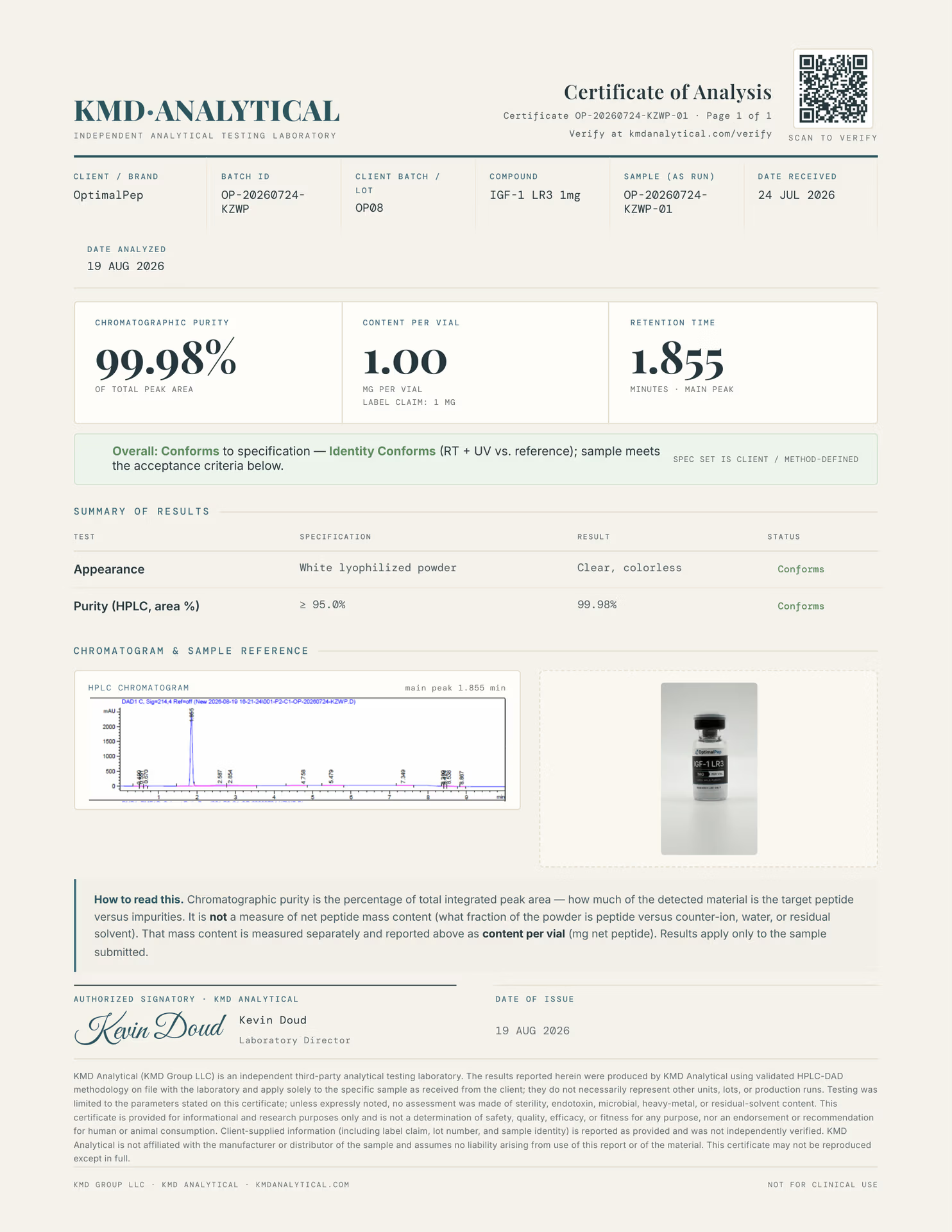
COA Available
High Demand
Only 24 left in stock
Designed for advanced anabolic signaling research
Precision IGF-1 analog with broad muscle-growth, tissue-repair, recovery, body-composition, and extended cellular-signaling research relevance.
Research Peptide Price
$80.00
Flexible checkout available
or 4 payments with Klarna
⚠️ For research use only. Not for human or veterinary use.
Product Description
Long-Acting IGF-1 Research Peptide
🧪
3rd Party
Tested
Tested
🇺🇸
Made in
USA
USA
📄
COA
Available
Available
IGF-1 LR3, also known as Insulin-like Growth Factor-1 Long R3, is a modified IGF-1 analog studied for its enhanced stability and longer-acting cellular signaling profile. It is commonly examined in research models involving IGF-1 receptor activity, muscle-growth signaling, protein synthesis, tissue repair, nutrient partitioning, and body-composition pathways.
Key Research Areas
🧬
IGF-1 receptor signaling in cellular growth, anabolic, and regenerative research models
💪
Muscle hyperplasia and lean-mass research focused on new muscle-cell development and growth signaling
⚡
Protein synthesis and recovery pathways involving amino-acid uptake, muscle regeneration, and repair signaling
🛠️
Tissue repair research evaluating muscle fiber, tendon, ligament, and connective-tissue recovery models
📊
Body-composition and nutrient-partitioning studies focused on fat-metabolism and lean-mass preservation pathways
This 1 mg presentation supports controlled IGF-1 pathway research designs, making it suitable for investigations involving extended cellular signaling, anabolic pathway activity, tissue repair, recovery, nutrient partitioning, and body-composition research.
Intended Use
📦 Format: Lyophilized powder (1mg)
⚠️ Use: For laboratory research use only. Not for human or veterinary use.
⚠️ Use: For laboratory research use only. Not for human or veterinary use.
Why Researchers Choose This Compound
🔗
Long-acting signaling profile supports research into sustained IGF-1 receptor activity and extended cellular pathway interaction.
🧪
Broad anabolic research utility makes it valuable for muscle growth, protein synthesis, recovery, and tissue-repair investigations.
📈
Strong body-composition research value offers a focused framework for examining lean-mass preservation, nutrient partitioning, and metabolic pathway effects.
Product Notes
✅ Research category: IGF-1 receptor and anabolic signaling
✅ Study context: Laboratory and non-clinical research models
✅ Compound focus: IGF-1 receptor activity, muscle-growth signaling, protein synthesis, tissue repair, nutrient partitioning, and extended cellular-signaling research