Product Description
TREK-1 Targeted Neuroactive Research Peptide
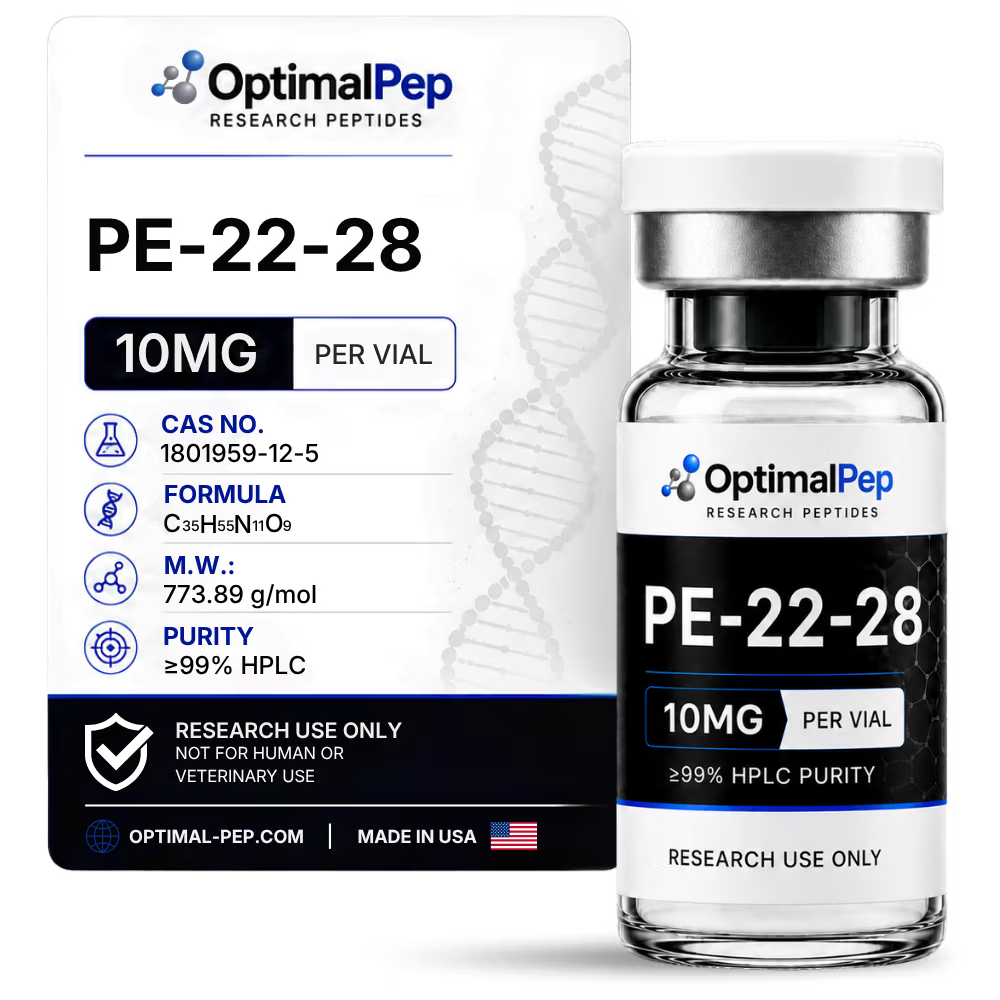
PE-22-28, also referred to as mini-spadin, is an investigational neuroactive peptide studied for its ability to selectively block the TREK-1 potassium channel. TREK-1 is involved in neuronal electrical activity and is frequently examined in research models related to mood regulation, stress adaptation, serotonergic signaling, and nervous-system resilience.
PE-22-28 is a short seven-amino-acid peptide with the sequence Gly-Val-Ser-Trp-Gly-Leu-Arg. It is derived from spadin, a naturally occurring peptide fragment associated with the protein sortilin. Its shortened structure is studied as a selective research tool for investigating TREK-1 channel inhibition and related neurological signaling pathways.
Preclinical models have explored PE-22-28 for rapid antidepressant-like activity, serotonergic support, hedonic-tone regulation, reduced anxiety-like responses, improved stress resilience, and neuroplasticity. Research also examines its potential relationship with the formation and survival of new neurons and the protection of existing neural cells under stressful conditions.
Key Research Areas
🔗
Selective TREK-1 potassium-channel blockade in laboratory models examining neuronal membrane signaling and electrical excitability
🧠
Mood-regulation and antidepressant-like signaling in preclinical models investigating rapid changes in mood-associated neurological pathways
⚡
Serotonergic activity and hedonic-tone research involving serotonin-related signaling, reward processing, motivation, and mood balance
🌿
Stress adaptation and anxiety-response signaling in models examining nervous-system resilience and behavioral responses under stress
🌱
Neuroplasticity and neurogenesis in research involving the formation, development, and survival of new neural cells
🛡️
Neuroprotection and brain-cell resilience in laboratory models involving cellular stress, neural injury, and protective neurological responses
This 10 mg presentation supports controlled neuroactive research designs, making it suitable for investigations across TREK-1 channel inhibition, neuronal excitability, serotonergic signaling, mood-related pathways, stress adaptation, anxiety-response, hedonic tone, neuroplasticity, neurogenesis, and neuroprotection.
Intended Use
📦 Format: Lyophilized powder (10mg)
⚠️ Use: For laboratory research use only. Not for human or veterinary use.
Why Researchers Choose This Compound
🎯
Selective ion-channel research target supports focused investigation of TREK-1 potassium channels and their role in neuronal excitability and mood-related signaling.
⚡
Rapid neurological signaling research makes it useful for studying short-latency antidepressant-like responses, serotonin pathways, and hedonic tone in preclinical models.
🌱
Neuroplasticity research value supports investigation into new-neuron development, neural-network adaptation, and brain-cell growth pathways.
🛡️
Broad stress-resilience relevance offers a controlled framework for examining anxiety-like responses, stress adaptation, nervous-system resilience, and neuroprotection.
Product Notes
✅ Research category: Neuroactive, mood-signaling, stress-response, and neuroplasticity research
✅ Study context: Laboratory and non-clinical research models
✅ Alternate name: Mini-spadin
✅ Peptide structure: Seven amino acids — Gly-Val-Ser-Trp-Gly-Leu-Arg
✅ Target focus: Selective TREK-1 potassium-channel blockade
✅ Compound focus: Serotonergic activity, mood regulation, hedonic tone, stress adaptation, anxiety-response, neuroplasticity, neurogenesis, and neuroprotection