Product Description
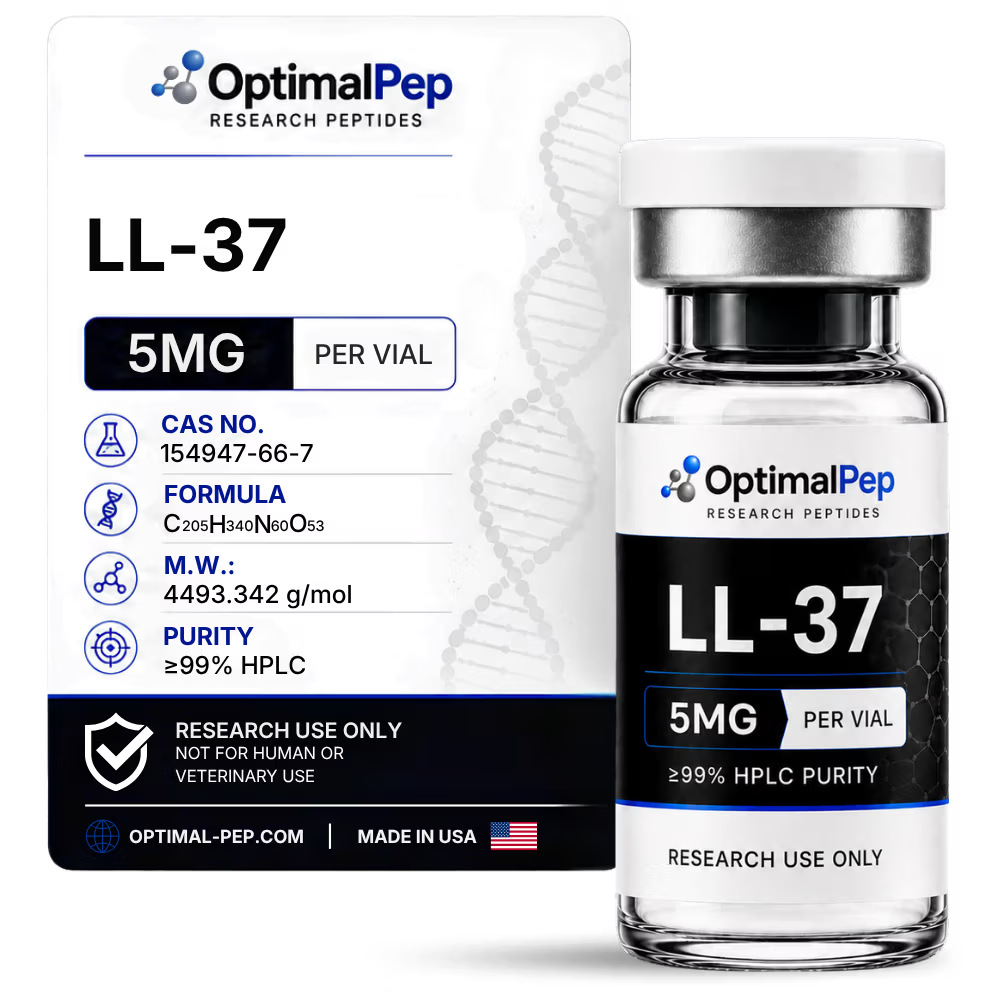
Human Cathelicidin Antimicrobial Research Peptide
LL-37 is a naturally occurring human cathelicidin peptide studied as part of the body’s front-line innate immune defense system. Laboratory research examines its broad antimicrobial activity, immune-signaling functions, and involvement in wound healing, tissue repair, angiogenesis, and inflammatory-pathway regulation.
LL-37 is investigated for activity against Gram-positive bacteria, Gram-negative bacteria, fungi, and enveloped viruses. Its antimicrobial effects are associated with interactions involving microbial outer membranes, which may compromise membrane integrity and contribute to pathogen neutralization in controlled laboratory models.
Research also explores LL-37 for its ability to interact with and disrupt protective microbial biofilms. These structured microbial communities can resist conventional antimicrobial exposure, making LL-37 relevant to investigations involving biofilm penetration, membrane destabilization, and persistent microbial-defense mechanisms.
Additional studies examine the peptide’s interaction with bacterial endotoxins such as lipopolysaccharides, or LPS. By binding these molecules in experimental systems, LL-37 is investigated for its potential role in reducing endotoxin-associated inflammatory signaling and helping regulate excessive immune responses.
Beyond antimicrobial defense, LL-37 is studied in wound-repair models for its involvement in angiogenesis, skin-cell migration, tissue remodeling, and wound closure. It also functions as an immune-signaling molecule in research involving recruitment of neutrophils, monocytes, and T-cells to sites of microbial exposure or tissue damage.
Key Research Areas
🦠
Broad-spectrum antimicrobial activity in laboratory models involving Gram-positive bacteria, Gram-negative bacteria, fungi, and enveloped viruses
🧱
Microbial-membrane disruption through investigation of peptide interactions with outer pathogen membranes and associated loss of membrane integrity
🧫
Biofilm penetration and disruption in research involving persistent microbial communities and protective extracellular matrices
🛡️
Bacterial endotoxin neutralization in models examining LL-37 binding to lipopolysaccharides and endotoxin-associated immune activation
🩹
Wound closure and tissue repair in laboratory models involving chronic wounds, non-healing tissue, re-epithelialization, and cellular migration
🩸
Angiogenesis and vascular signaling in research examining new blood-vessel formation and restoration of nutrient delivery to repairing tissues
🧬
Immune-cell recruitment through chemotactic signaling involving neutrophils, monocytes, T-cells, and other innate or adaptive immune components
⚖️
Inflammatory-pathway modulation in models examining balanced microbial clearance, immune activation, and control of excessive inflammatory signaling
This 5 mg presentation supports controlled antimicrobial, innate-immunity, and tissue-repair research designs, making it suitable for investigations across microbial-membrane disruption, bacterial and fungal defense, enveloped-virus models, biofilm penetration, LPS neutralization, angiogenesis, skin-cell migration, wound closure, immune-cell recruitment, and inflammatory-pathway regulation.
Intended Use
📦 Format: Lyophilized powder (5mg)
⚠️ Use: For laboratory research use only. Not for human or veterinary use.
Why Researchers Choose This Compound
🦠
Broad antimicrobial research relevance supports investigation across bacterial, fungal, viral, and persistent microbial-defense models.
🧫
Biofilm-focused research utility provides a framework for studying penetration and disruption of protective microbial communities that may resist conventional antimicrobial exposure.
🩹
Integrated wound-repair relevance supports studies involving angiogenesis, skin-cell migration, tissue remodeling, and closure of chronic or non-healing wounds.
⚖️
Combined immune and inflammatory research value offers a controlled framework for examining immune-cell recruitment, pathogen clearance, endotoxin neutralization, and regulation of excessive inflammation.
Product Notes
✅ Research category: Antimicrobial defense, innate immunity, wound healing, and inflammatory signaling
✅ Study context: Laboratory and non-clinical research models
✅ Peptide class: Human cathelicidin antimicrobial peptide
✅ Antimicrobial focus: Gram-positive bacteria, Gram-negative bacteria, fungi, enveloped viruses, and microbial-membrane disruption
✅ Biofilm focus: Biofilm penetration, protective-matrix disruption, and persistent microbial-community research
✅ Healing focus: Angiogenesis, skin-cell migration, tissue repair, chronic wounds, and wound closure
✅ Immune focus: Neutrophil, monocyte, and T-cell recruitment, LPS neutralization, and inflammatory-pathway modulation
✅ Validation status: Research peptide without FDA approval or established therapeutic use for this product