Product Description
Multimodal Neurotrophic Research Complex
Cerebrolysin is a neurotrophic mixture containing low-molecular-weight neuropeptides and free amino acids. Derived from purified porcine brain proteins, it is studied as a multimodal neurological research agent for its potential influence on neuronal protection, brain repair, cognitive function, neurogenesis, and synaptic plasticity.
Its low-molecular-weight components are investigated for their ability to cross the blood-brain barrier and interact with neurological signaling and repair pathways. Research examines how these components may influence neuronal survival, cellular metabolism, oxidative stress, inflammatory responses, apoptosis, and functional recovery following neurological injury.
Cerebrolysin has been studied in models involving ischemic and hemorrhagic stroke, traumatic brain injury, dementia, Alzheimer’s-related cognitive decline, memory impairment, and neurological rehabilitation. Additional research explores its potential relationship with the formation of new neurons, cerebral blood vessels, and synaptic connections involved in learning and memory.
Key Research Areas
🧠
Stroke recovery and neurological rehabilitation in models involving ischemic or hemorrhagic injury, motor function, and functional recovery
🩹
Traumatic brain injury research examining cerebral swelling, neuronal damage, functional rehabilitation, and neurological recovery pathways
🧩
Dementia and Alzheimer’s-related cognitive research involving memory loss, cognitive deficits, learning, and progression of neurological decline
🛡️
Neuroprotection and neuronal survival in models examining oxidative stress, inflammatory signaling, cellular injury, and apoptosis
🌱
Neurogenesis and cerebral angiogenesis involving the formation of new neurons and blood vessels within brain-repair research models
🔗
Synaptic plasticity and neural connectivity in studies examining brain-cell communication, learning pathways, memory formation, and cognitive adaptation
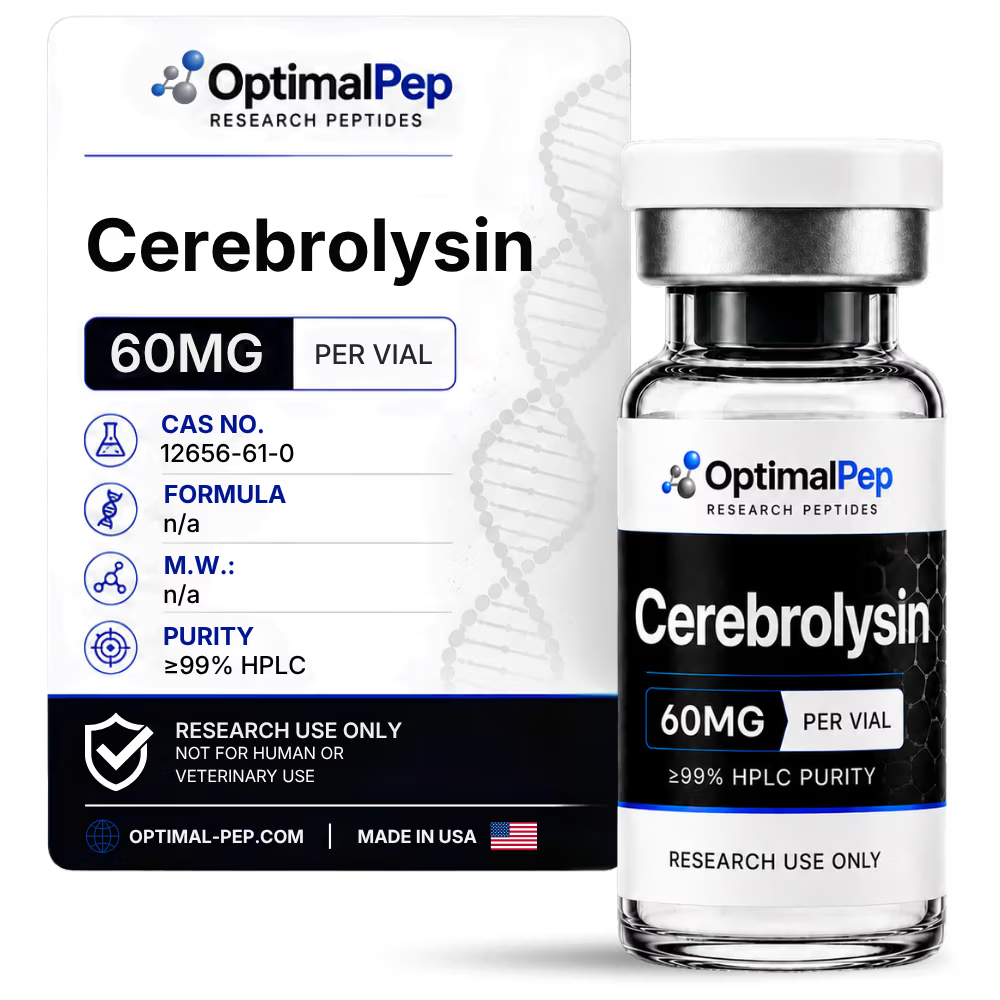
This 60 mg presentation supports controlled neurological research designs, making it suitable for investigations across stroke and TBI recovery, neuronal protection, oxidative stress, inflammatory signaling, apoptosis, cognitive function, neurogenesis, cerebral angiogenesis, synaptic plasticity, learning, and memory.
Intended Use
📦 Format: Lyophilized powder (60mg)
🧪 Composition: Low-molecular-weight neuropeptides and free amino acids derived from purified porcine brain proteins
⚠️ Use: For laboratory research use only. Not for human or veterinary use.
Why Researchers Choose This Compound
🧠
Multimodal neurological research activity supports investigation across several interconnected brain-repair, neuroprotection, metabolic, inflammatory, and functional recovery pathways.
🛡️
Broad neuronal-protection research value makes it useful for examining oxidative stress, neuroinflammation, apoptosis, cellular injury, and neuronal survival.
🌱
Neurogenesis and repair-pathway relevance supports investigations into new-neuron development, cerebral blood-vessel formation, and recovery after neurological injury.
🔗
Cognitive and synaptic-plasticity research offers a controlled framework for studying neural connectivity, learning, memory, dementia, and Alzheimer’s-related cognitive decline.
Product Notes
✅ Research category: Neurotrophic, neuroprotective, cognitive, and neurological-recovery research
✅ Study context: Laboratory and non-clinical research models
✅ Source: Purified porcine brain-derived protein components
✅ Composition focus: Low-molecular-weight neuropeptides and free amino acids
✅ Research-model focus: Stroke, traumatic brain injury, dementia, Alzheimer’s-related decline, cognition, learning, and memory
✅ Mechanism focus: Neuroprotection, oxidative-stress regulation, inflammation, apoptosis, neurogenesis, angiogenesis, and synaptic plasticity