Product Description
Mitochondrial-Derived Cellular Protection Research Peptide
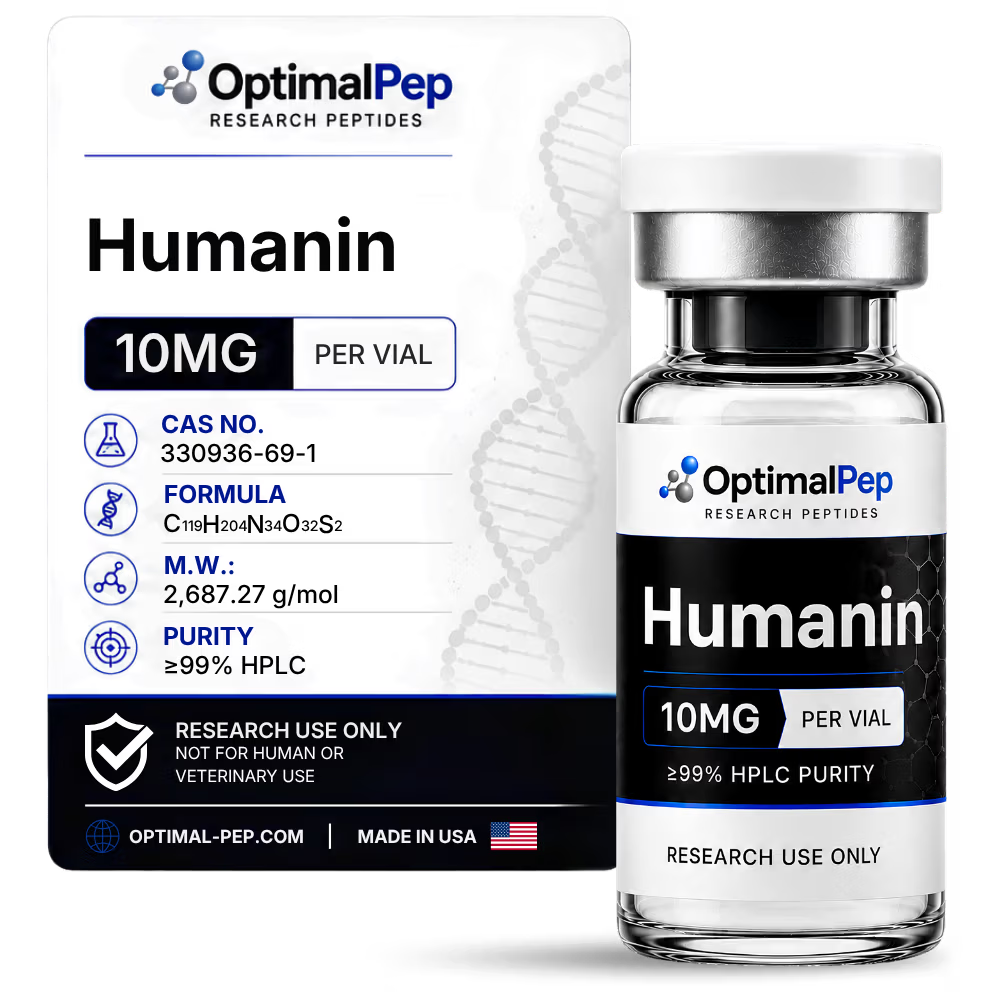
Humanin is a naturally occurring 24-amino-acid mitochondrial-derived peptide encoded within the MT-RNR2 region of mitochondrial DNA. It is studied as a cytoprotective signaling molecule involved in cell survival, anti-apoptotic activity, metabolic homeostasis, mitochondrial stress responses, and healthy-aging pathways.
Humanin was originally identified during research involving brain tissue associated with Alzheimer’s disease, where it demonstrated protective activity against amyloid-beta-associated neuronal stress. This discovery led to broader investigation of Humanin in neuroprotection, cellular survival, memory-related pathways, oxidative stress, and neurodegenerative research models.
A major area of Humanin research involves the regulation of apoptosis, or programmed cell death. Experimental models investigate interactions between Humanin and intracellular pro-apoptotic proteins such as BAX, as well as extracellular cell-surface receptor systems involved in survival and stress-response signaling.
Humanin is also examined in metabolic research for its potential relationship with insulin sensitivity, glucose homeostasis, pancreatic-cell protection, and metabolic adaptation during physiological stress. These pathways make it relevant to experimental models involving glucose regulation and both type 1 and type 2 diabetes.
Cardiovascular research investigates Humanin in models of ischemia, reduced oxygen availability, impaired blood flow, oxidative damage, and cellular stress within cardiac tissue. Additional studies examine its relationship with inflammatory signaling and mitochondrial integrity during tissue injury.
Humanin concentrations have also been observed to decline with age in multiple experimental systems, making the peptide an area of interest in aging, longevity, healthspan, mitochondrial function, cellular resilience, and age-associated metabolic research.
Key Research Areas
🛡️
Cytoprotection and cellular survival in laboratory models examining cellular resistance to metabolic, oxidative, and physiological stress
🧬
Anti-apoptotic signaling through research involving programmed cell death pathways, BAX-associated signaling, and cell-survival mechanisms
🧠
Neuronal protection and neurodegenerative stress in research involving amyloid-beta toxicity, neuronal survival, memory-related pathways, and Alzheimer’s-associated models
⚡
Mitochondrial function and stress responses in experimental models examining cellular energy systems, mitochondrial integrity, and adaptation to metabolic stress
📊
Insulin sensitivity and glucose homeostasis in metabolic research involving glucose utilization, insulin signaling, and whole-cell metabolic regulation
🧪
Pancreatic-cell protection in laboratory and animal models examining insulin-producing cells and metabolic dysfunction associated with type 1 and type 2 diabetes
❤️
Cardiovascular cellular protection in research involving ischemic stress, low-oxygen conditions, impaired blood flow, oxidative injury, and cardiac-cell survival
🔥
Inflammatory and oxidative-stress signaling in models examining cellular damage, inflammatory markers, oxidative balance, and tissue-stress responses
⏳
Aging and longevity pathways in research examining age-associated declines in Humanin levels, cellular resilience, healthspan, and metabolic function
This 10 mg presentation supports controlled mitochondrial, cellular-protection, and metabolic research designs, making it suitable for investigations across cytoprotection, apoptosis regulation, BAX signaling, neuronal survival, amyloid-beta stress, mitochondrial function, insulin sensitivity, glucose homeostasis, pancreatic-cell protection, cardiovascular ischemia, inflammatory signaling, oxidative stress, aging, longevity, and healthspan pathways.
Intended Use
📦 Format: Lyophilized powder (10mg)
🧬 Compound: Humanin mitochondrial-derived peptide
⚠️ Use: For laboratory research use only. Not for human or veterinary use.
Why Researchers Choose This Compound
🛡️
Defined cytoprotective research relevance supports investigation of cellular survival, stress resistance, anti-apoptotic signaling, and protection from cellular injury.
🧠
Broad neurological research utility provides a framework for studying neuronal protection, amyloid-beta-associated stress, memory-related pathways, and neurodegenerative cellular damage.
📊
Integrated metabolic research value supports studies involving insulin sensitivity, glucose homeostasis, pancreatic-cell survival, and metabolic adaptation.
❤️
Cardiovascular stress research relevance offers a controlled framework for examining ischemia, low-oxygen injury, oxidative damage, impaired blood flow, and cardiac-cell survival.
⏳
Aging and mitochondrial research utility supports investigation of age-associated Humanin decline, mitochondrial integrity, cellular resilience, metabolic homeostasis, longevity, and healthspan.
Product Notes
✅ Research category: Mitochondrial signaling, cytoprotection, metabolism, neuroprotection, and healthy aging
✅ Study context: Laboratory and preclinical research models
✅ Peptide class: 24-amino-acid mitochondrial-derived peptide (MDP)
✅ Genetic origin: Encoded within the MT-RNR2 region of mitochondrial DNA
✅ Cell-survival focus: Cytoprotection, anti-apoptotic signaling, BAX-associated pathways, and cellular stress responses
✅ Neurological focus: Neuronal survival, amyloid-beta-associated stress, cognitive pathways, and neurodegenerative research
✅ Metabolic focus: Insulin sensitivity, glucose homeostasis, pancreatic-cell protection, and metabolic adaptation
✅ Cardiovascular focus: Ischemic stress, low-oxygen injury, oxidative damage, impaired blood flow, and cardiac-cell survival
✅ Aging focus: Mitochondrial function, inflammatory signaling, cellular resilience, longevity, and healthspan research