





Advanced Research Peptide
Inflammatory Response & Immune Modulation Research System
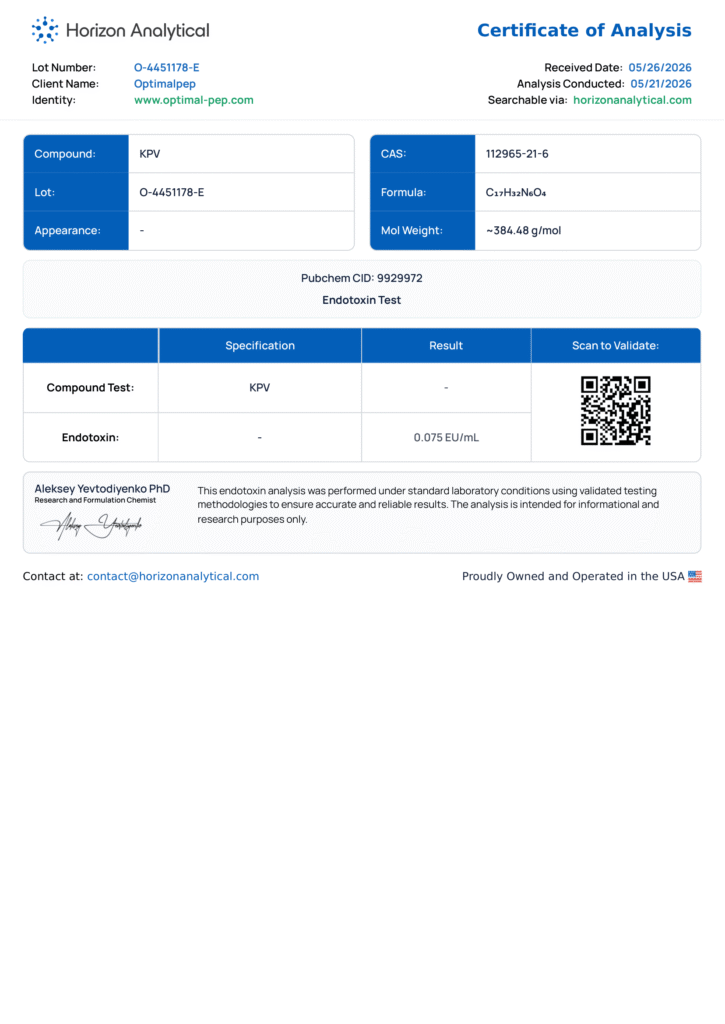
KPV is a naturally occurring tripeptide derived from alpha-melanocyte-stimulating hormone studied for
anti-inflammatory signaling, antimicrobial activity, immune modulation, and NF-κB pathway regulation across
gut barrier, skin inflammation, mucosal, and immune-response research models.
🔥 Inflammation Focus
NF-κB pathway research
🧬 Immune Modulation
Melanocortin receptor studies
🛡️ Gut Barrier
Mucosal integrity research
🔬 Research Grade
KPV pathway investigation
3rd Party Tested
USA Made
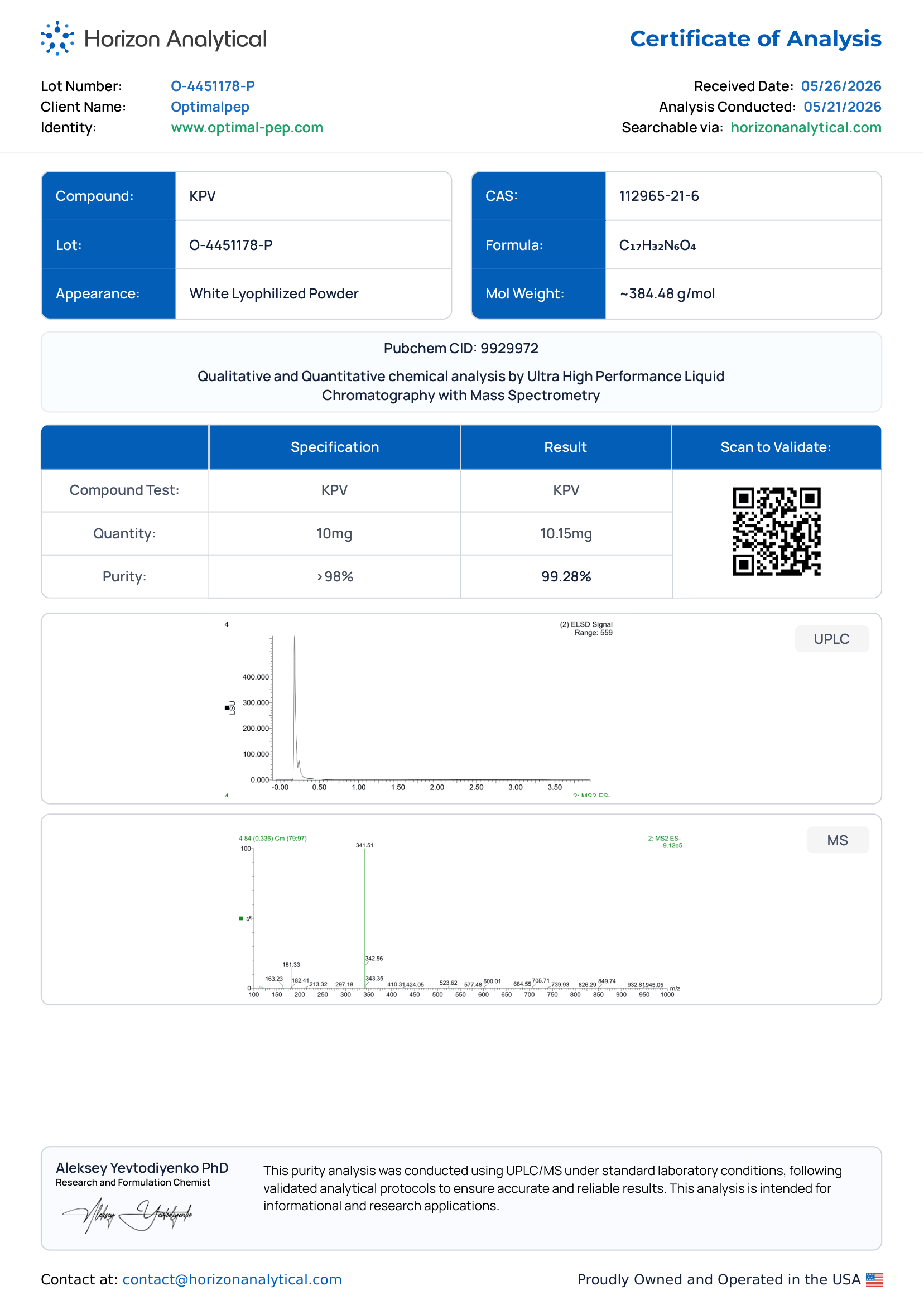
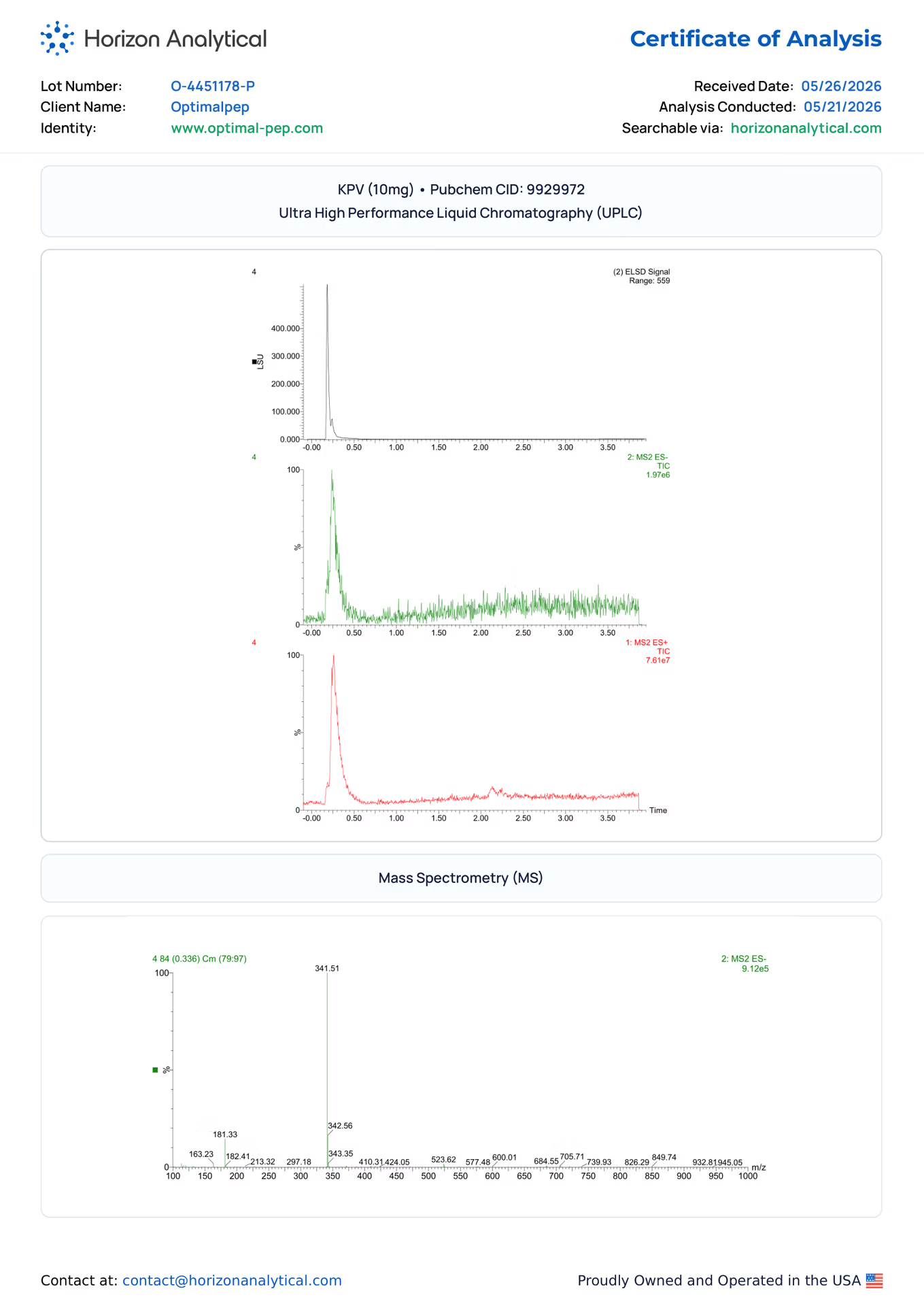
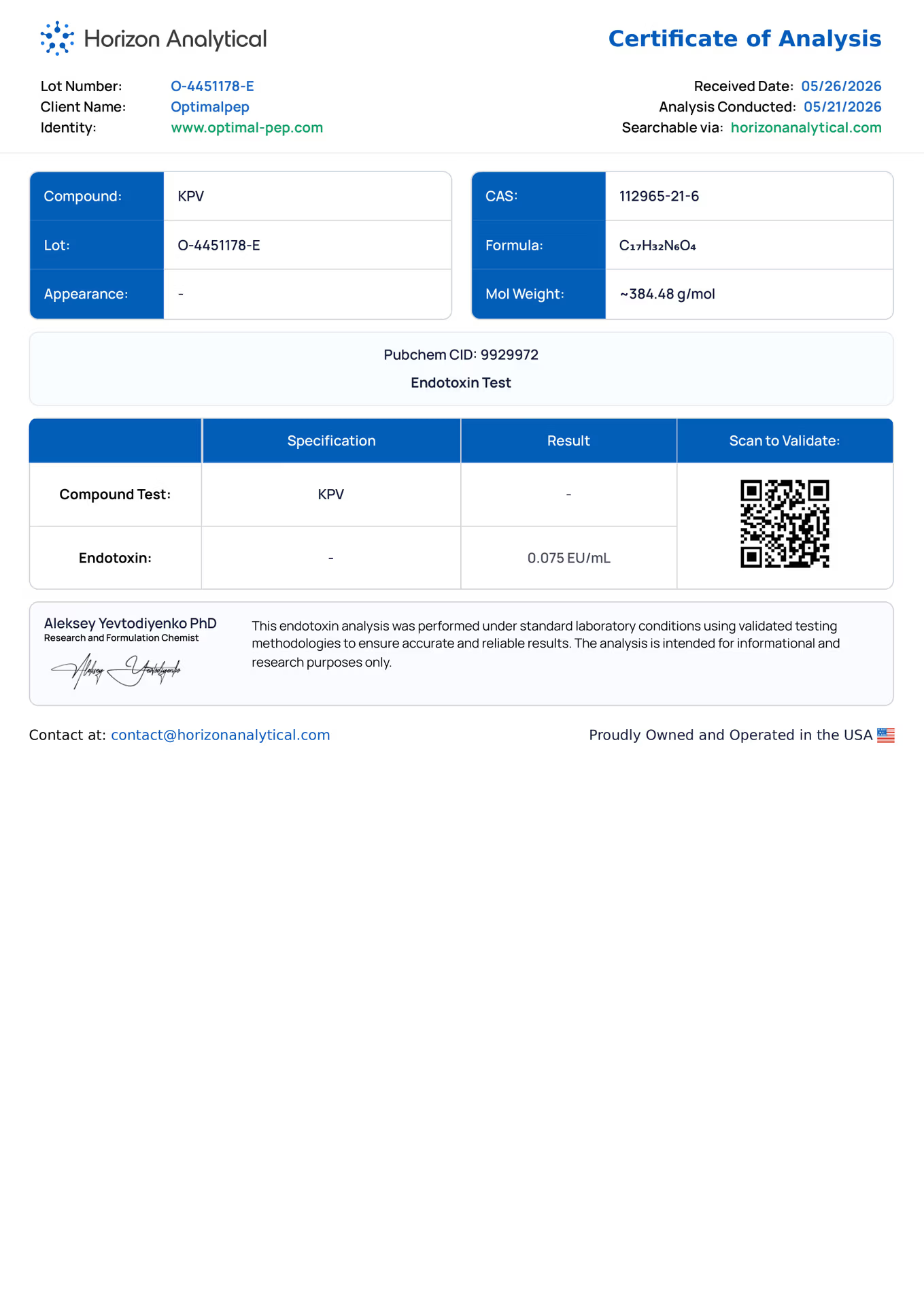
COA Available
High Demand
Only 42 left in stock
Designed for advanced inflammatory-response research
Precision tripeptide studied for immune balance, mucosal-barrier support, antimicrobial activity, and inflammatory pathway regulation.
Research Peptide Price
Original price was: $80.00.$72.00Current price is: $72.00.
Flexible checkout available
or 4 payments with Klarna
⚠️ For research use only. Not for human or veterinary use.
Product Description
Inflammatory Response Research Peptide
🧪
3rd Party
Tested
Tested
🇺🇸
Made in
USA
USA
📄
COA
Available
Available
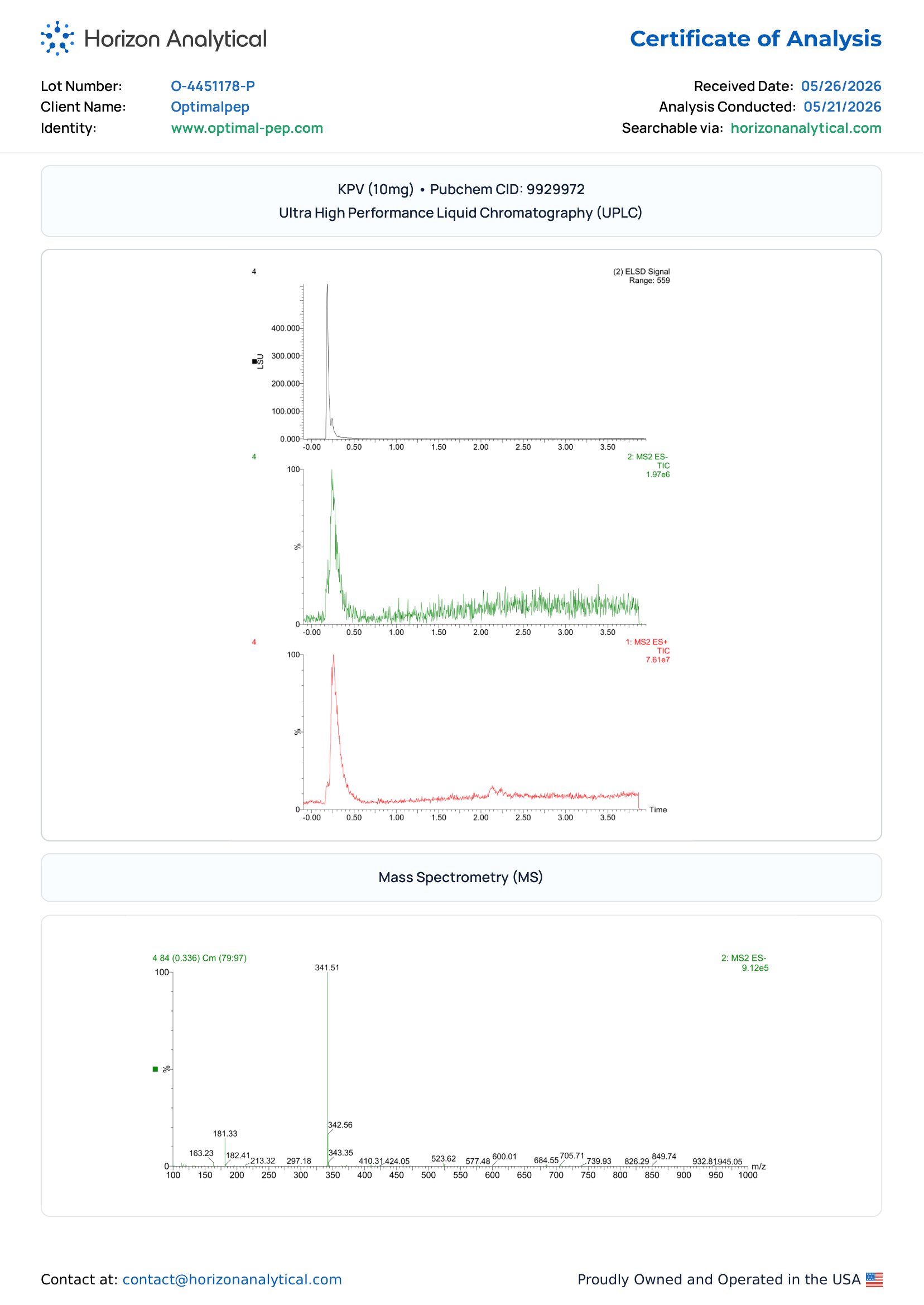
KPV (Lys-Pro-Val) is a naturally occurring tripeptide derived from alpha-melanocyte-stimulating hormone (α-MSH), widely studied for its role in anti-inflammatory, antimicrobial, and immune-modulating research.
Scientific interest has focused on its involvement in melanocortin receptor activity, NF-κB pathway regulation, mucosal-barrier integrity, and inflammatory signal modulation, particularly in gut, skin, and immune-response models.
Key Research Areas
🔥
Inflammatory-response modulation involving NF-κB pathway and cytokine-signaling research
🛡️
Gut-barrier and mucosal integrity studies including intestinal inflammation and epithelial-support models
🧴
Skin inflammation research involving dermatitis, irritation-response, and topical pathway models
🧬
Melanocortin receptor signaling and immune-cell response pathway investigations
This peptide is frequently utilized in advanced inflammatory-response research supporting investigation of immune balance, gut-barrier function, antimicrobial activity, skin inflammation, and cytokine-related pathway dynamics within laboratory settings.
Intended Use
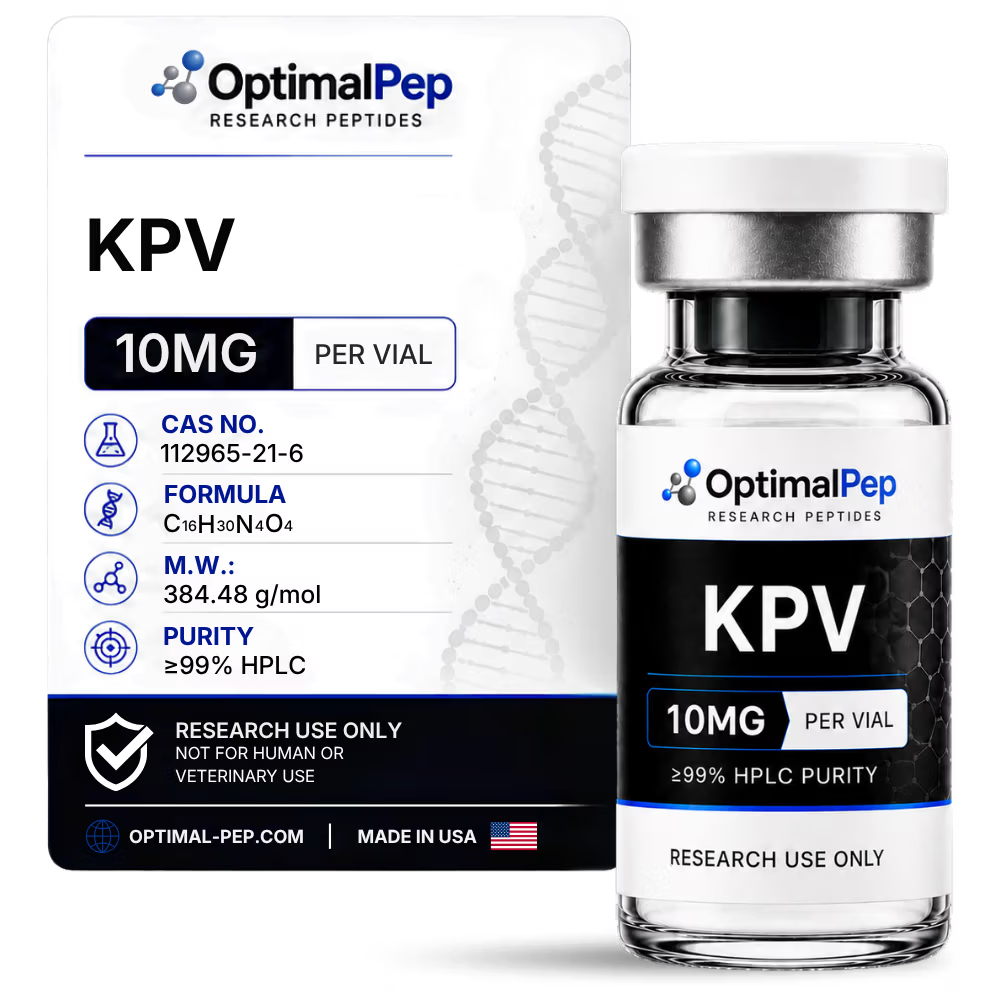
📦 Format: Lyophilized powder (10mg)
⚠️ Use: For laboratory research use only. Not for human or veterinary use.
⚠️ Use: For laboratory research use only. Not for human or veterinary use.
Why Researchers Choose This Compound
🔗
Focused inflammatory-pathway relevance supports investigation into NF-κB signaling, cytokine balance, and immune-cell response models.
🧪
Broad gut and skin research utility makes it useful for mucosal-barrier, intestinal, dermatologic, and antimicrobial pathway studies.
📈
High immune-modulation research value offers a controlled framework for studying inflammatory balance without broad pathway suppression models.
Product Notes
✅ Research category: Inflammatory-response, antimicrobial, and immune-modulating signaling
✅ Study context: Laboratory and preclinical immune-response models
✅ Compound focus: KPV tripeptide activity, melanocortin receptor interaction, NF-κB regulation, gut-barrier support, and skin-inflammation pathway research