Product Description
Melanocortin & Photoprotection Research Peptide
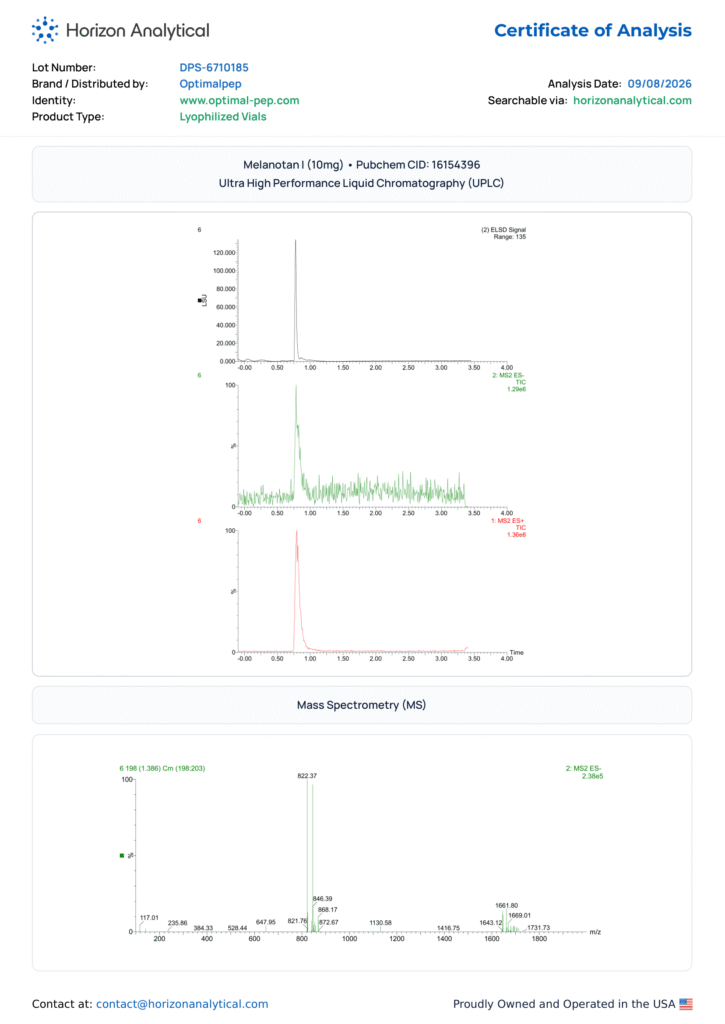
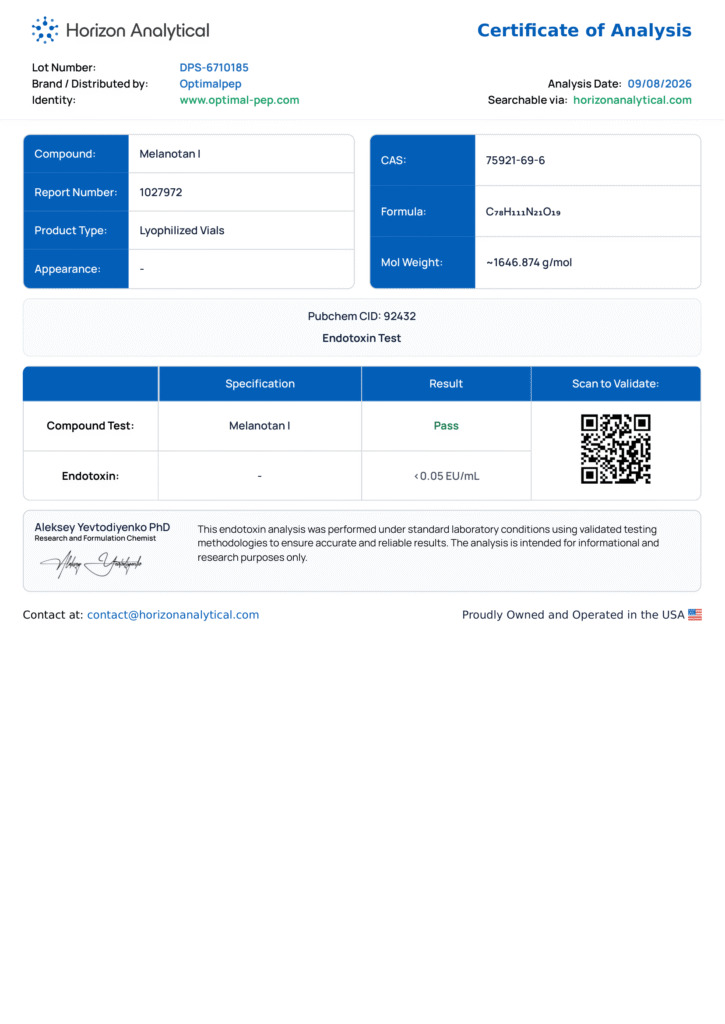
Melanotan-1, also known as afamelanotide, is a synthetic peptide modeled after the naturally occurring hormone alpha-melanocyte-stimulating hormone (α-MSH). It is studied for its ability to activate melanocortin signaling and stimulate the production of eumelanin, the darker form of melanin involved in skin pigmentation and photoprotective responses.
Melanocortin receptor activation is investigated for its role in increasing pigmentation without requiring the same degree of direct ultraviolet exposure normally associated with tanning. This makes Melanotan-1 relevant to laboratory research involving melanogenesis, pigment regulation, UV-response pathways, and visible-light-associated cellular stress.
Afamelanotide has also been studied clinically in the context of erythropoietic protoporphyria (EPP), a rare disorder characterized by severe phototoxic reactions to visible light. Research in this area examines increased pain-free light exposure, photoprotection, and changes in light-triggered inflammatory responses.
Eumelanin itself is studied as both a physical pigment barrier and an antioxidant-associated defense against light-related cellular stress. Research involving Melanotan-1 therefore extends beyond pigmentation to include UV-induced cellular damage, sunburn-cell formation, oxidative stress, phototoxicity, and inflammatory skin signaling.
Key Research Areas
🧬
Alpha-MSH and melanocortin receptor signaling in laboratory models examining melanocyte activation and pigment-regulatory pathways
🎨
Melanogenesis and eumelanin production in research involving skin pigmentation, melanocyte activity, and pigment synthesis
☀️
Photoprotection and light-exposure response in research examining cellular responses to ultraviolet and visible-light exposure
🛡️
UV-associated cellular defense through investigation of eumelanin as a physical pigment barrier and antioxidant-associated protective mechanism
🔬
Erythropoietic protoporphyria research involving severe phototoxicity, pain-free light exposure, visible-light tolerance, and associated skin responses
🧪
UV-induced cellular damage in experimental models examining sunburn-cell formation, oxidative stress, and light-associated tissue injury
🔥
Phototoxic and inflammatory skin signaling in research involving light-triggered inflammation and cellular stress responses
🌤️
Pigmentation without prolonged UV exposure in models examining melanocortin-mediated skin darkening independent of conventional tanning exposure
This 10 mg presentation supports controlled melanocortin and photobiology research designs, making it suitable for investigations across α-MSH signaling, melanocortin receptor activation, melanogenesis, eumelanin production, skin pigmentation, UV and visible-light response, photoprotection, phototoxicity, cellular damage, oxidative stress, and inflammatory skin pathways.
Intended Use
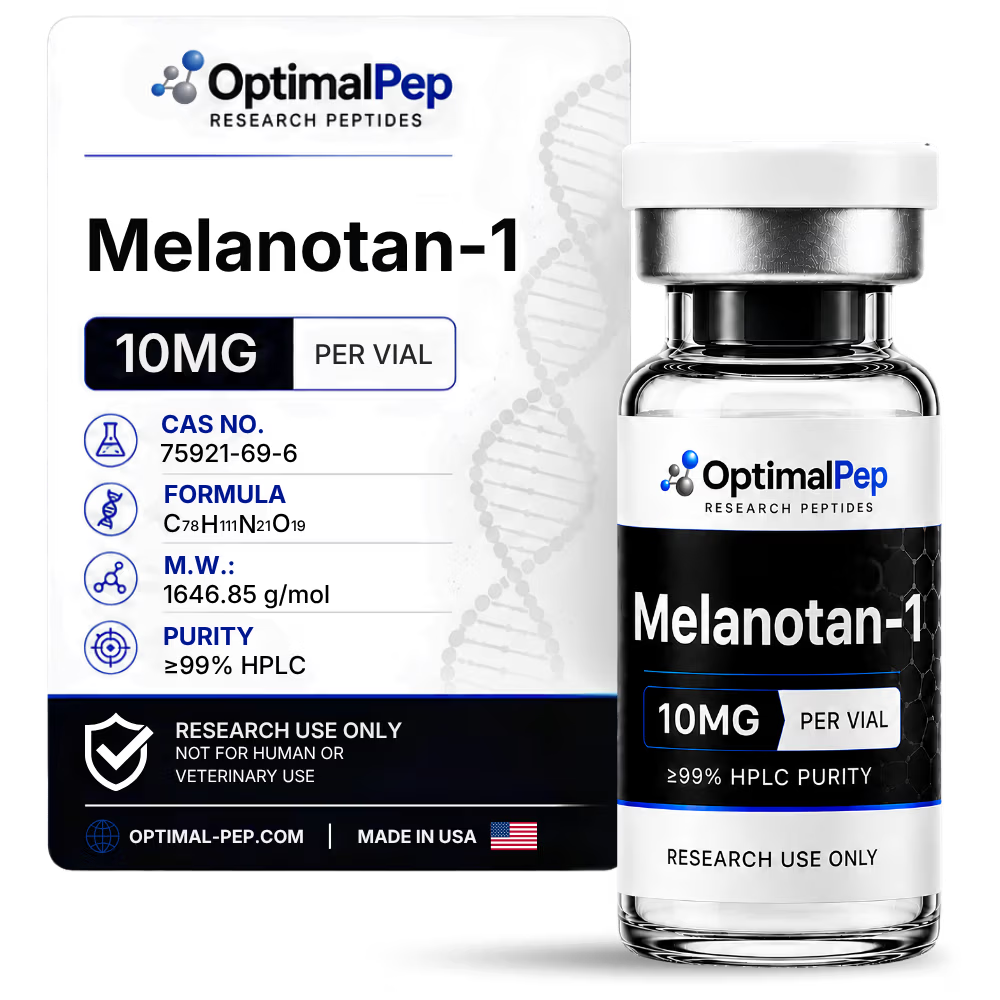
📦 Format: Lyophilized powder (10mg)
🧬 Compound: Melanotan-1 / afamelanotide
⚠️ Use: For laboratory research use only. Not for human or veterinary use.
Why Researchers Choose This Compound
🧬
Defined melanocortin signaling pathway supports focused investigation of α-MSH-associated receptor activation, melanocyte signaling, and pigment regulation.
🎨
Direct melanogenesis research relevance provides a framework for studying eumelanin synthesis and increased pigmentation without relying solely on prolonged ultraviolet exposure.
☀️
Photoprotection research utility supports investigations involving light tolerance, UV-associated cellular stress, visible-light responses, and pigment-mediated protection.
🛡️
Broad photobiology relevance offers a controlled framework for examining sunburn-cell formation, oxidative stress, phototoxicity, and inflammatory skin responses.
Product Notes
✅ Research category: Melanocortin signaling, melanogenesis, pigmentation, and photoprotection
✅ Study context: Laboratory and non-clinical research models
✅ Alternate name: Afamelanotide
✅ Hormone analog: Synthetic analog of alpha-melanocyte-stimulating hormone (α-MSH)
✅ Pigmentation focus: Melanocortin receptor activation, melanocyte signaling, melanogenesis, eumelanin production, and skin pigmentation
✅ Photobiology focus: UV and visible-light response, photoprotection, phototoxicity, oxidative stress, and light-triggered inflammatory signaling
✅ Disease-model focus: Erythropoietic protoporphyria and severe light-sensitivity research frameworks